English
 français
 Deutsch
 русский
 italiano
 español
 português
 العربية
 日本語
日本語 Polski
 中文
中文
How can we help you
You can contact us at any way that is convenient for you. We are available at 24 hours/7 days via email or telephone.
Contact Us

For most rough concrete floors, 16 grit or 30 grit is a suitable starting point. If the surface is extremely uneven or requires heavy material removal, 6 grit may be a better option. There is no single starting grit for every project—the right choice depends on the condition of the concrete and the amount of material that needs to be removed.
Starting with the correct grit improves grinding efficiency, reduces unnecessary tool wear, and creates a consistent surface for the grits that follow.
Why Is the Starting Grit Important?
The first grinding pass establishes the foundation for the entire grinding process.
A grit that is too fine may struggle to remove surface defects, while a grit that is unnecessarily coarse can remove more concrete than required and leave deeper scratches that take longer to refine.
Choosing the right starting grit helps achieve efficient material removal while maintaining a balanced grinding process.
Which Grit Should You Choose?
The condition of the concrete should always determine your starting grit.
6 Grit
Use 6 grit for very rough concrete, significant surface leveling, or floors with severe imperfections that require aggressive material removal.
Because it cuts aggressively, 6 grit is generally reserved for demanding applications rather than routine concrete grinding.
16 Grit
For most rough concrete floors, 16 grit is a common starting point. It removes surface irregularities efficiently while producing a scratch pattern that can be refined during the next grinding stages.
30 Grit
Choose 30 grit when the concrete is relatively even but still requires initial grinding before progressing to finer grits. It removes less material than 16 grit while leaving a shallower scratch pattern.
What If the Concrete Has an Existing Coating?
If the floor is covered with epoxy, paint, glue, mastic, or another coating, coating removal should usually be completed before selecting a grinding grit.
PCD removal tools are typically more effective than metal bond diamond grinding tools for removing these materials. After the coating has been removed, inspect the concrete surface and choose the starting grit based on the floor condition rather than the previous coating.
Should You Always Start with the Lowest Grit?
No. Choosing the lowest grit available does not always produce the best results.
A very coarse grit is designed for aggressive material removal. If the floor only has minor surface imperfections, starting with 6 grit may remove more concrete than necessary and create deeper scratches that require additional grinding to eliminate.
Experienced contractors select the starting grit based on the condition of the concrete rather than using the same grit for every project.
How Do You Know If You Selected the Right Grit?
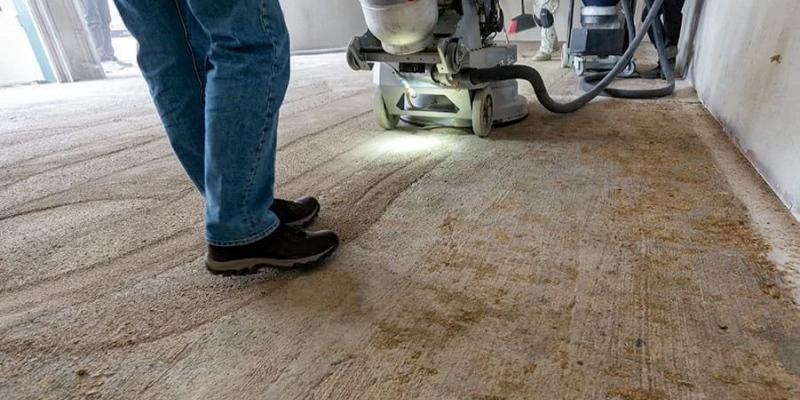
After the first grinding pass, the floor should show consistent material removal and a uniform scratch pattern.
If the tool removes surface defects efficiently without excessive grinding, the starting grit is appropriate. If defects remain after several passes, a coarser grit may be needed. If the tool is removing more concrete than necessary, a finer starting grit may be the better choice.
Getting the Best Results on Rough Concrete
For most rough concrete applications, 16 grit or 30 grit provides an effective starting point, while 6 grit is better suited for heavily damaged or extremely uneven surfaces that require aggressive grinding.
Instead of selecting a grit based on habit, evaluate the condition of the concrete first. Matching the grit to the floor helps improve grinding efficiency, extends the service life of your diamond tools, and creates a better foundation for every grinding stage that follows.

 IPv6 network supported