English
 français
 Deutsch
 русский
 italiano
 español
 português
 العربية
 日本語
日本語 Polski
 中文
中文
How can we help you
You can contact us at any way that is convenient for you. We are available at 24 hours/7 days via email or telephone.
Contact Us

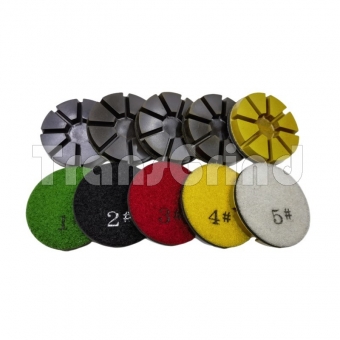
Some diamond polishing pads can be used for both wet and dry polishing, but not all pads are designed for both applications. Whether a polishing pad can be used wet and dry depends on its construction, resin formulation, and the manufacturer’s recommendations. Using a pad in the wrong condition may reduce performance, shorten tool life, or affect the final finish.
Choosing the correct polishing method is important for achieving consistent results and getting the expected performance from diamond polishing pads.
What Is the Difference Between Wet and Dry Polishing?
Wet and dry polishing use diamond abrasives to gradually refine the concrete surface, but the working conditions are different.
Wet polishing uses water during the process to reduce heat, control dust, and provide cooling for the polishing pad. It is often preferred when longer tool life and better temperature control are important.
Dry polishing does not use water and is usually performed with a suitable dust collection system. It can be more convenient for indoor projects where slurry cleanup is not practical.
Neither method is always better. The right choice depends on the polishing pad design, job conditions, and the required finish.
Can All Diamond Polishing Pads Be Used Wet and Dry?
No. Some polishing pads are designed specifically for wet use, while others are developed for dry applications or both wet and dry operation.
A pad designed only for wet polishing may rely on water for cooling and lubrication. Using it dry can create excessive heat and may cause faster wear or inconsistent polishing results.
Pads designed for wet and dry use are made to maintain consistent performance under both wet and dry polishing conditions.
Before changing from wet to dry polishing, or the other way around, always confirm that the pad is suitable for the intended method.
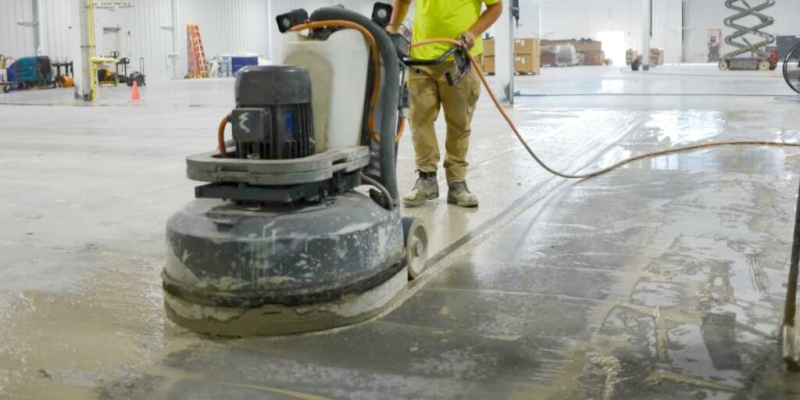
When Should You Choose Wet or Dry Polishing?
The choice between wet and dry polishing depends on the project requirements.
Wet polishing may be a better option when:
Dry polishing may be preferred when:
In some projects, contractors may use different methods during different stages of polishing depending on the floor condition and desired result.
How to Get Better Results from Diamond Polishing Pads?
Before starting a polishing project, consider:
Using the right polishing method helps diamond pads work more efficiently and creates a more consistent surface finish.
Choosing the Right Polishing Method
Diamond polishing pads can be used wet and dry only when they are designed for both applications. The best choice depends on the pad design, concrete condition, working environment, and project requirements.
Rather than choosing wet or dry polishing based only on preference, match the polishing method to the tool and the job conditions. This helps improve polishing performance, extend pad life, and achieve more predictable results.

 IPv6 network supported