English
 français
 Deutsch
 русский
 italiano
 español
 português
 العربية
 日本語
日本語 Polski
 中文
中文
How can we help you
You can contact us at any way that is convenient for you. We are available at 24 hours/7 days via email or telephone.
Contact Us

Low concrete floor grinding efficiency can be caused by several factors, including incorrect diamond tool selection, unsuitable bond hardness, excessive or insufficient machine pressure, improper speed, and the actual condition of the concrete. A diamond grinding tool that performs well on one floor may work very differently on another. Before changing tools or increasing machine pressure, it is important to identify what is limiting the grinding process.
Is the Diamond Tool Suitable for the Concrete?
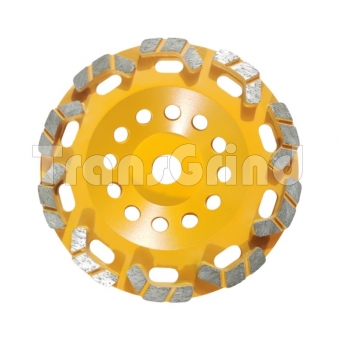
One of the first things to check is whether the diamond grinding tool matches the concrete condition. Diamond tools are designed with different bond formulations and diamond specifications for different applications.
Concrete hardness is particularly important when selecting the bond. A softer bond is generally more suitable for harder concrete because it wears more readily and exposes fresh diamond particles. A harder bond is usually better suited to softer or more abrasive concrete because it can reduce excessive bond wear.
If the bond is not suitable, the tool may either wear too quickly or fail to expose fresh diamonds effectively. In both cases, grinding efficiency can suffer.
Can the Tool Become Glazed?
Glazing is another common reason for poor grinding performance. It can occur when the bond is too hard for the concrete or when the diamonds are no longer being exposed effectively.
When a diamond tool becomes glazed, the surface may appear smooth or shiny, while material removal becomes noticeably slower. Simply applying more pressure is not always the best solution. The problem may be related to bond selection, concrete characteristics, or operating conditions.
Is the Machine Pressure Appropriate?
Machine pressure affects how effectively the diamonds engage with the concrete, but more pressure does not automatically mean faster grinding.
Excessive pressure can increase tool wear, heat, and machine load without providing a proportional increase in material removal. On the other hand, insufficient pressure may not allow the tool to work effectively, particularly during heavier grinding stages.
The appropriate pressure depends on the machine, tooling, concrete condition, and grinding stage. It should be adjusted based on actual grinding performance rather than using maximum pressure as a general solution.
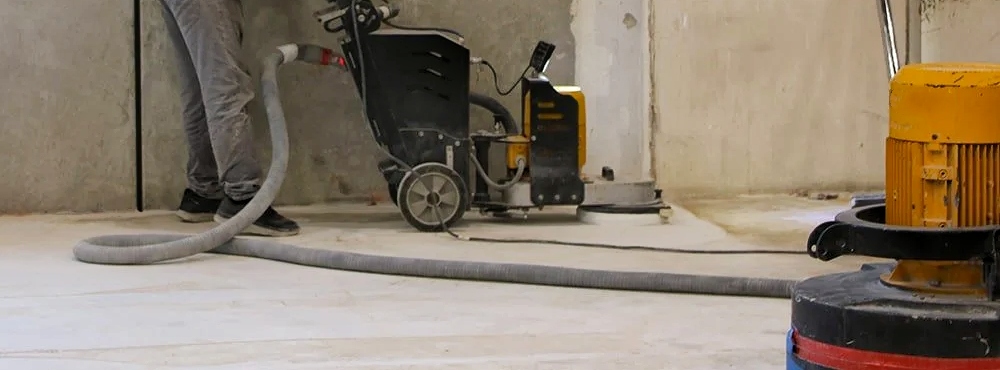
Is the Grinding Speed Correct?
Machine speed can also affect grinding efficiency. There is no single speed that works for every concrete floor or every diamond tool.
If the speed is too high or too low for the particular machine and tooling, material removal may become less efficient. The correct operating speed should be within the tool and grinder manufacturer's recommended range and should provide stable contact between the tooling and the floor.
Speed should also be considered together with tool diameter, segment design, machine power, and the condition of the concrete.
Could the Concrete Condition Be the Problem?
The floor itself can have a major influence on grinding efficiency. Concrete hardness, aggregate type, surface condition, and the amount of material that needs to be removed can all affect how a tool performs.
For example, a floor with hard aggregate may require a different bond or grinding approach from a softer concrete surface. A floor with a thick coating or adhesive residue may also require specialized PCD removal tooling before conventional concrete grinding can proceed efficiently.
This is why changing to a more aggressive grit is not always the right answer. The tool needs to match the material being removed.
Does the Grit Match the Grinding Stage?
Using an unsuitable grit can also reduce productivity. Coarser diamond grits are generally used when greater material removal is required, while finer grits are used as the surface becomes more refined.
Starting with a grit that is too fine for a rough or uneven floor can make the initial grinding stage unnecessarily slow. However, simply choosing the coarsest available grit is not always appropriate either. The right starting grit depends on the amount of material that needs to be removed and the condition of the floor.
How Can I Improve Concrete Grinding Efficiency?
Start by checking the basic factors rather than immediately increasing machine pressure or changing to a coarser tool. Confirm that the diamond tooling is appropriate for the concrete, the bond is suitable, the machine is operating within the recommended range, and the pressure and speed are appropriate for the current grinding stage.
It is also useful to observe the tool during operation. Excessive wear, glazing, uneven wear, heat, or inconsistent material removal can provide clues about what needs to be adjusted.
Efficient concrete grinding is the result of matching the tooling and operating conditions to the floor, rather than relying on a single setting. With the right concrete grinding tools, suitable bond selection, and proper machine operation, contractors can achieve more consistent material removal while avoiding unnecessary tool wear and downtime.

 IPv6 network supported